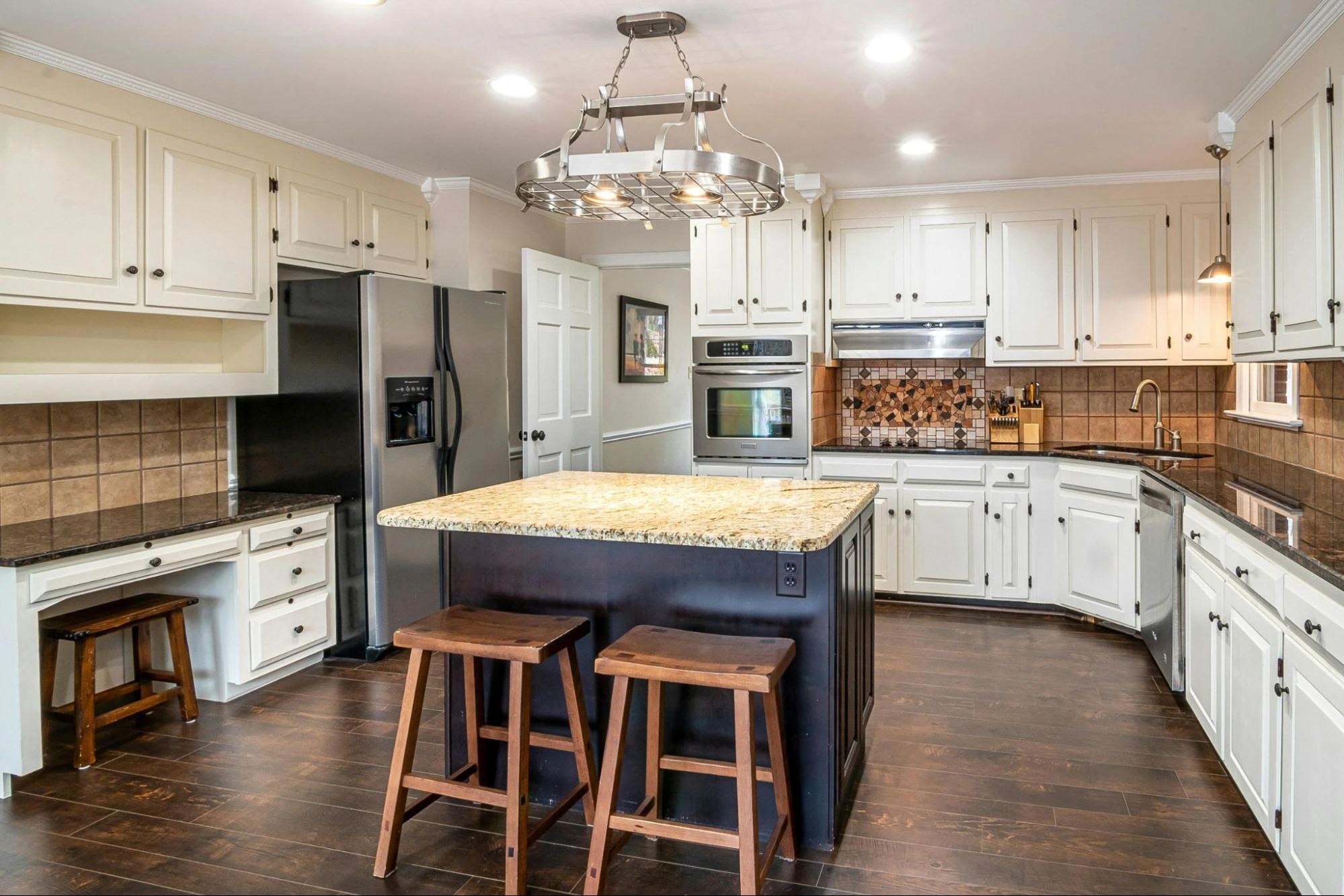
When renovating your kitchen, choosing the right flooring is crucial. Engineered wood flooring is a popular option, offering the beauty of real wood with additional durability and moisture resistance. In this guide, we’ll explore the pros and cons of using engineered wood flooring in the kitchen, how it compares to other options, and provide tips for selecting and maintaining it.
What is Engineered Wood Flooring?
Engineered wood flooring is a type of flooring made from layers of wood pressed together, topped with a real wood veneer. Unlike solid wood, which is made from a single piece of timber, engineered wood consists of multiple layers that contribute to its stability and durability.
The construction typically includes a hardwood top layer and several layers of plywood or fibreboard underneath. This layered structure allows engineered wood to withstand more moisture and temperature fluctuations than solid wood, while still providing the authentic look of natural wood.
For a more in-depth explanation, check out our blog on all things engineered wood flooring.
Pros of Engineered Wood Flooring in the Kitchen
| Pro’s | Details |
|---|---|
| Durability and Longevity | Withstands foot traffic and daily kitchen use without wearing out quickly. |
| Moisture Resistance | Better at handling humidity and occasional spills than solid wood flooring. |
| Aesthetic Variety | Available in a wide range of styles, colours, and finishes to suit any design. |
| Ease of Installation | Installation methods like click-lock systems make it quick and easy to lay. |
1. Durability and Longevity
Engineered wood flooring is an excellent choice for high-traffic areas like the kitchen. Its multi-layered construction gives it the strength to handle heavy foot traffic and the wear and tear that comes with daily kitchen use. Engineered wood resists the expansion and contraction caused by temperature fluctuations, such as those that occur during cooking. This makes it highly durable in a kitchen environment where heat and temperature changes are frequent.
2. Moisture Resistance
In the kitchen, where humidity and spills are common, engineered wood outperforms solid wood. It has a layered design that helps reduce the risk of warping due to moisture, making it more resistant to spills and splashes. However, while engineered wood is better at handling moisture than solid wood, it’s still crucial to clean up spills quickly to avoid long-term damage. Proper maintenance can ensure it remains a strong and reliable flooring choice for kitchens.
3. Aesthetic Variety
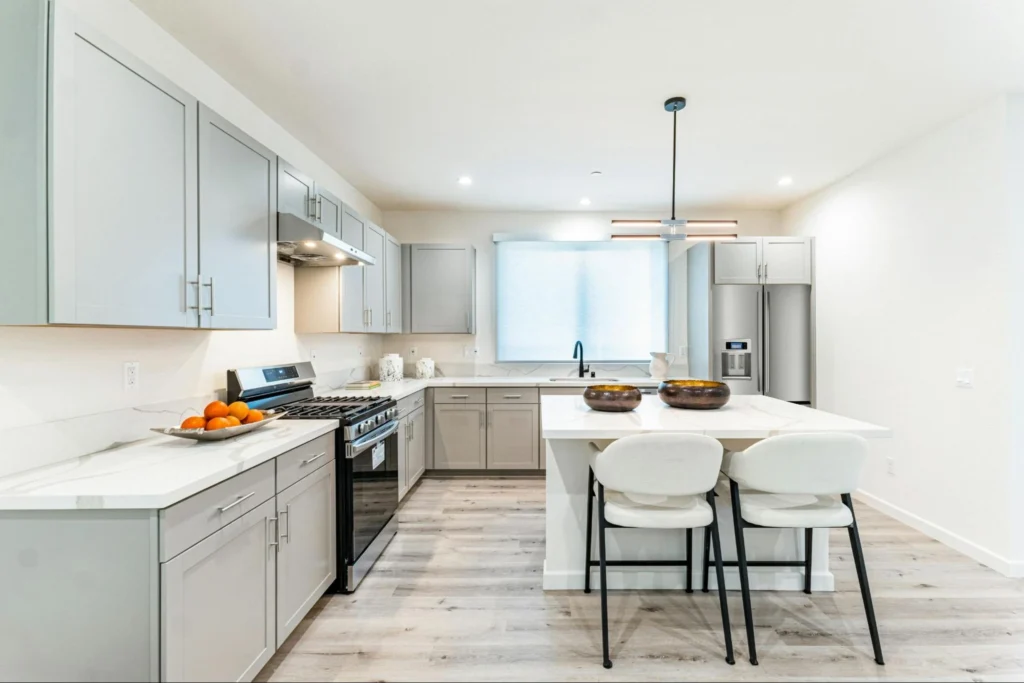
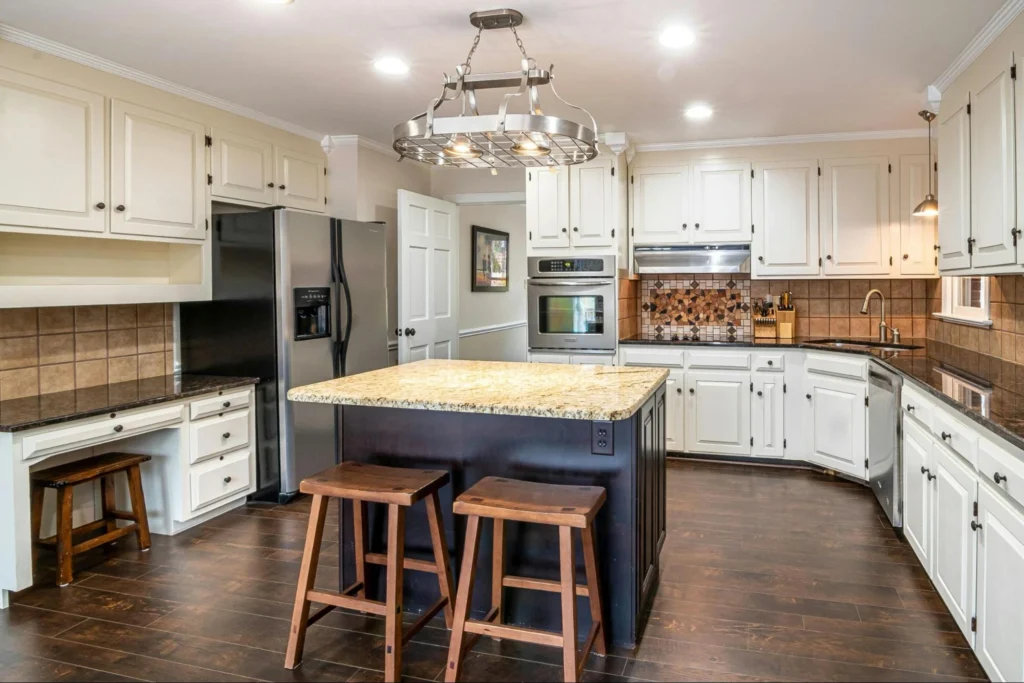
Engineered wood flooring offers a wide range of aesthetic options to suit any kitchen style. From sleek modern finishes to more rustic or traditional wood tones, there’s a design to complement any kitchen décor. Whether you’re pairing it with light or dark cabinetry, engineered wood provides the natural beauty of wood with the versatility to fit various kitchen styles, enhancing the overall look of the space.
4. Ease of Installation
The installation of engineered wood flooring in the kitchen is straightforward, thanks to easy-to-use systems like click-lock or glue-down methods. Click-lock systems, in particular, make the process quick and efficient, reducing the installation time significantly compared to other flooring options. This not only makes it a convenient choice for kitchen renovations but also limits disruption during installation, allowing you to enjoy your new kitchen floor sooner.
Cons of Engineered Wood Flooring in the Kitchen
| Cons | Details |
|---|---|
| Moisture and Limitation | Prolonged exposure to water can still damage the flooring over time. |
| Susceptibility to Scratches | It can be scratched or dented by heavy objects, pets, or furniture. |
| Cost Considerations | More expensive than laminate or vinyl but cheaper than solid wood. |
| Maintenance Requirements | Requires regular cleaning and occasional refinishing to maintain its appearance. |
1. Moisture Limitations
While engineered wood flooring is more moisture-resistant than solid wood, it’s not completely impervious to water damage. In a kitchen, where spills and splashes are frequent, prolonged exposure to moisture can still cause the wood to swell or warp over time. To reduce these risks, regular maintenance is essential, including sealing the floor and wiping up spills promptly. Placing rugs or mats near sinks and dishwashers can also help prevent excess moisture from seeping into the flooring.
2. Potential for Scratches and Dents
Engineered wood is durable, but it can still be scratched or dented in a busy kitchen. Dropping heavy pots, dragging furniture, or even everyday wear from pets can cause visible damage. To protect the floor, it’s a good idea to use felt pads under furniture legs and avoid dragging objects across the surface. Rugs in high-traffic areas or near cooking stations can help protect the floor, while regular cleaning can prevent dirt and grit from scratching the surface.
3. Cost Considerations
Engineered wood flooring typically comes at a mid-range price, making it a more affordable option compared to solid wood while still offering a high-end appearance. However, it’s more expensive than options like laminate or vinyl. Over time, maintenance costs, such as refinishing, may add up, but the long-term durability of engineered wood often justifies the initial investment. For those seeking the beauty of wood with practical benefits, it remains a cost-effective solution for kitchens.
4. Maintenance Requirements
To keep engineered wood flooring in top shape, regular cleaning is necessary. Dirt and debris can scratch the surface, so sweeping or vacuuming is important. While engineered wood is generally low-maintenance, refinishing might be required after years of wear, depending on the thickness of the top veneer. It’s also important to avoid harsh chemical cleaners that could damage the finish. A simple cleaning routine and occasional maintenance will help preserve the floor’s beauty and extend its lifespan in the kitchen.
Comparison with Other Flooring Options
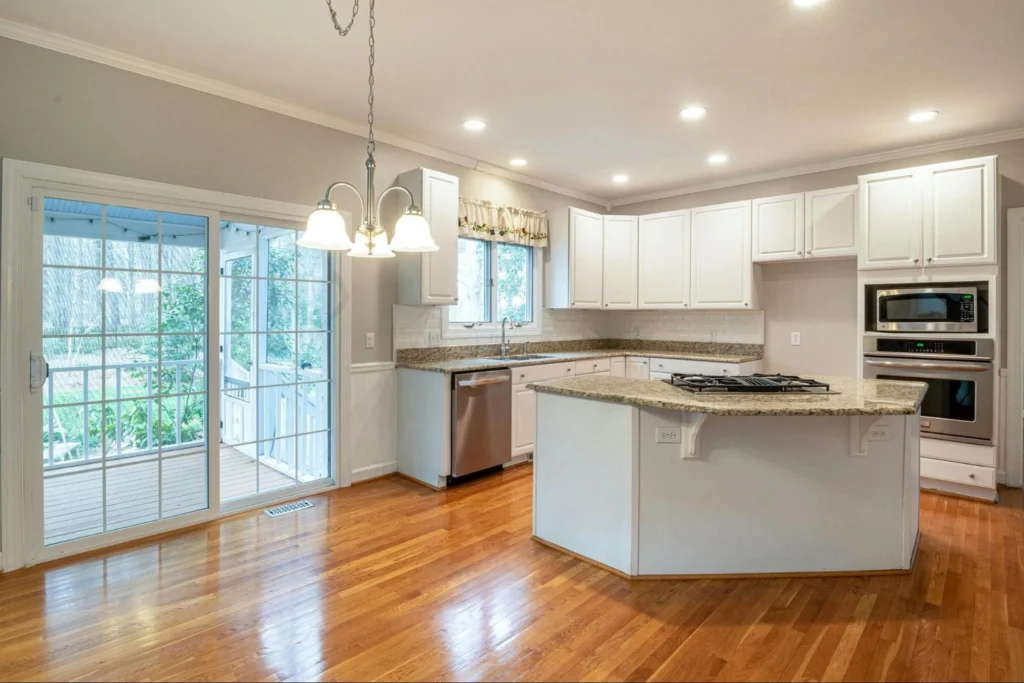
It’s essential to compare different options while selecting flooring for your Kitchen. Engineered wood, solid wood, and laminate are three popular choices, each with its own set of advantages and drawbacks. Understanding how they perform in terms of durability, moisture resistance, cost, and ease of installation can help you make an informed decision.
| Aspect | Engineered Wood | Solid Wood | Laminate |
|---|---|---|---|
| Durability | Highly durable, stable, and less prone to warping | Durable but prone to expansion and contraction | Less durable; more prone to scratches and wear |
| Moisture Resistance | Handles moisture better, ideal for kitchens | Poor moisture resistance, not suitable for kitchens | Limited moisture resistance, can swell with water exposure |
| Cost | Mid-range pricing | Higher initial cost | Generally the most affordable |
| Visual Appeal | Natural wood veneer, authentic appearance | Genuine wood with natural grain | Imitates wood but lacks natural texture |
| Ease of Installation | Click-lock and glue-down options are easier to install | Requires more skill to install | Easiest to install, great for DIY projects |
| Maintenance | Requires occasional refinishing and regular cleaning | Can be refinished multiple times but needs care | Low maintenance but less repairable long-term |
In conclusion, each flooring option has its strengths and weaknesses. Ultimately, your choice should depend on your budget, the look you want, and how much maintenance you’re willing to invest. If you’re looking to explore a range of flooring options, The Flooring Masters offers a diverse selection to suit different styles and needs.
Tips for Choosing and Maintaining Engineered Wood Flooring
Selection Tips
When choosing engineered wood flooring for your kitchen, consider the finish and thickness of the top veneer. Thicker veneers can be refinished more times, extending the lifespan of the floor. Also, opt for a finish that complements your kitchen’s overall aesthetic, whether it’s a glossy modern look or a matte rustic feel.
Maintenance Advice
To maintain your engineered wood flooring, sweep or vacuum regularly to avoid dirt buildup. Clean spills immediately to prevent moisture from penetrating the wood. Additionally, consider refinishing the floor every few years if the top layer allows it, and use mats or rugs in high-traffic areas to protect the surface.
Why Choose Engineered Wood Flooring for Your Kitchen?
Engineered wood flooring is a stylish and practical choice for kitchens, offering durability, moisture resistance, and a range of aesthetic options. While there are some moisture limitations and maintenance requirements, the pros often outweigh the cons, especially when compared to other flooring options.
Why Choose The Flooring Masters?
At The Flooring Masters, we offer a wide selection of high-quality engineered wood flooring that can elevate the look of your kitchen. Our experts are here to help you find the perfect match for your design and practical needs. Request a free sample or consult with our team for personalised advice on your kitchen renovation from our website.
Leave a Reply