Have you ever walked through a forest, marvelling at the beauty of the trees around you?
The rich colours, the intricate grain patterns, the sense of warmth and natural wonder – it’s an experience that stays with you.
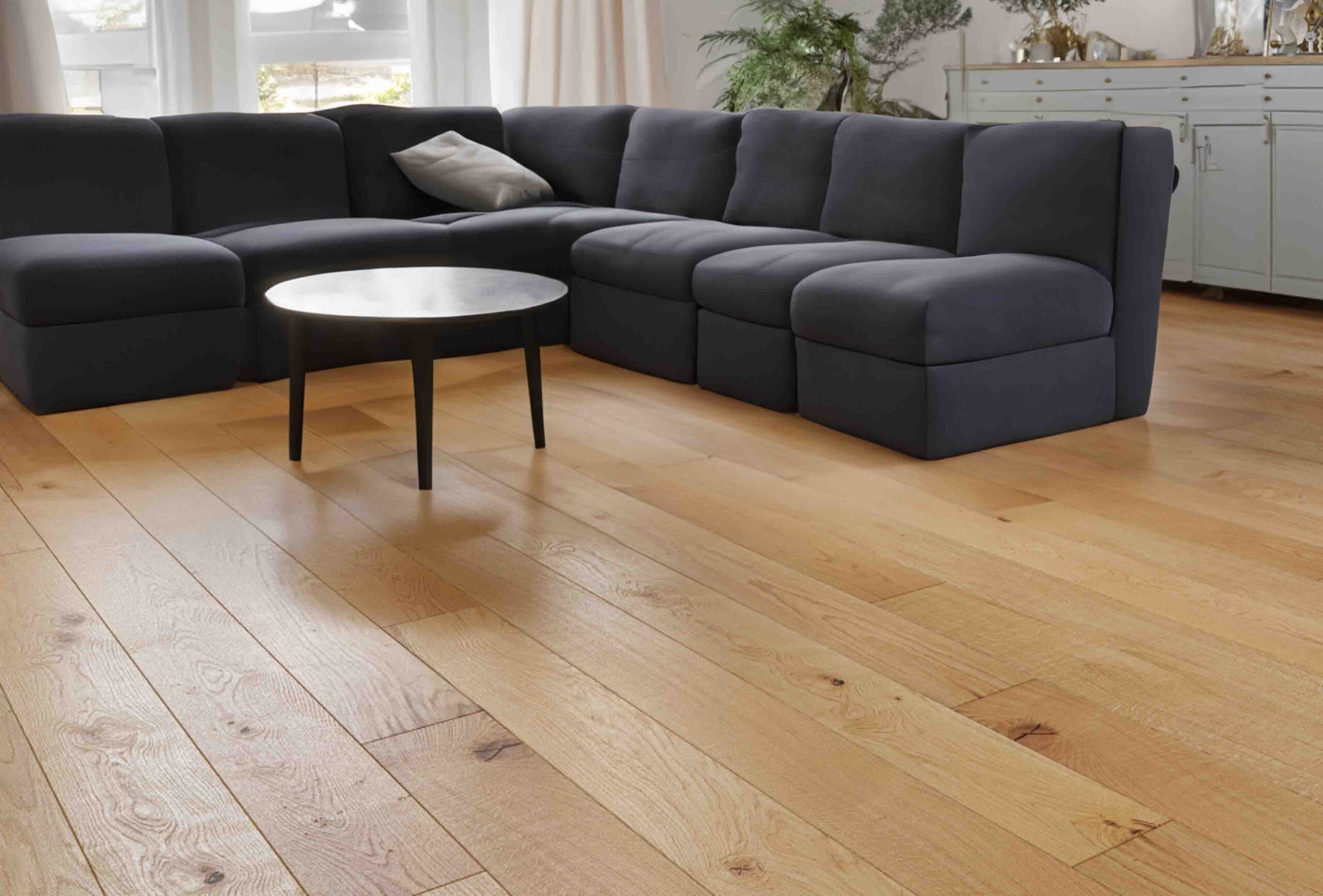
Imagine bringing that feeling into your home with an engineered wood floor.
But what exactly is an engineered wood floor?
If you’ve found yourself asking this question, you’re not alone. Many people are intrigued by engineered wood flooring but need to figure out what it entails.
In simple terms, an engineered wood floor is a type of flooring that combines the natural beauty of real wood with the stability and durability of modern engineering.
But there is so much more to engineered wood floors. At The Flooring Masters, we receive many questions about this flooring option, such as:
- What makes engineered wood flooring so unique?
- How does it differ from solid wood flooring?
- What are the benefits of choosing engineered wood for your home?
- How can you select the perfect engineered wood floor for your style and needs?
So, we’ve decided to address these questions. By the end of this blog, you’ll clearly understand what engineered wood flooring is and why it has become an increasingly popular choice among homeowners and interior designers alike.
Let’s start by uncovering the basics of this innovative flooring solution.

What is an Engineered Wood Floor?
An engineered wood floor is a type of flooring that combines the natural beauty of real wood with the stability and durability of modern manufacturing techniques. It consists of multiple layers of wood that are bonded together to create a strong, stable, and long-lasting floor.
The Core Layer: Providing Stability and Durability
The core layer is the foundation of an engineered wood floor. It’s made from either plywood or high-density fibreboard (HDF), which are materials known for their strength and stability.
Plywood is created by layering thin sheets of wood veneer and bonding them together, while HDF is made from wood fibres that are compressed and bonded under high pressure and heat.
Benefits of Core Layer
You know how trees change throughout the year?
In the summer, they grow bigger because of the heat and moisture, and in the winter, they shrink because of the cold and dry air.
The core layer of an engineered wood floor works similarly. It helps the floor adjust to changes in moisture and temperature, just like a tree does.
This is important because when a floor can’t adjust to these changes, it can start to have problems. It might warp (get bent out of shape), shrink (get smaller), or cup (become uneven or wavy). However, engineered wood floors can avoid these problems with the special core layer. They can handle different moisture levels and temperatures without getting damaged.
The core layer is the part of the engineered wood floor that helps it stay strong and look good for a long time. It’s made to handle all the things that happen to floors daily, like people walking on them, things dropping on them, and even scratches from furniture or pets.
This layer ensures that your floor is not easily damaged and looks great for many years.
Because of this, engineered wood floors can be used in many different places, such as kitchens, bathrooms, and even basements. They’re a good choice for many different rooms and homes.
But the core layer isn’t the only reason engineered wood flooring performs well. The veneer layer also provides a beautiful finish.
The Veneer Layer: Adding Natural Beauty
On top of the core layer, you’ll find the veneer layer. This is a thin slice of natural hardwood, typically measuring between 0.6mm and 4mm thick, depending on the quality of the flooring. The veneer layer shows off the natural patterns and marks that make each type of wood special. These patterns are called grain patterns, which differ for each kind of wood.
Some wood, like oak, has a warm and rich colour. Other wood, like maple, looks creamy and smooth. There’s even a type of wood called Brazilian cherry, which has a unique and exotic look.
When you choose the veneer layer for your engineered wood floor, you get to enjoy the natural beauty of the wood. The veneer layer lets you see and feel the same things you would if you had a floor made from a solid piece of wood.
You can sand and refinish the veneer layer, allowing you to refresh the look of your floor and extend its lifespan. However, due to the thickness of the veneer, this can typically only be done once or twice over the floor’s lifetime.
Let’s look closer at why engineered wood floors work excellently.
The Benefits of Engineered Wood Flooring: Durability, Versatility, and More
Durability and Stability
Engineered wood flooring is built to last. Its construction, with layers of wood stacked and glued together, makes it strong and stable. It can withstand daily wear and tear without warping or creating gaps, even when the temperature and humidity change.
“Engineered wood flooring is tough. It stays stable and looks great for a long time, even in places where other wood might have problems.”
Tom Smith, a flooring expert at The Flooring Masters
Versatility in Installation
Another great thing about engineered wood flooring is that you can install it differently. You can float it, glue it down, or nail it down, depending on what’s underneath and the specific product you choose. This makes it a good choice for many homes and rooms.
Ease of Maintenance
Engineered wood flooring is also easy to maintain. The top layer is tough and can handle scratches, dents, and daily wear. To keep it looking nice, you just need to sweep, vacuum, and sometimes mop with a damp cloth.
If your floor does get damaged, you can sand and refinish the top layer to make it look new again. This is cheaper than replacing the whole floor.
Cost-Effectiveness
Engineered wood flooring often costs less than solid wood. It uses a thinner layer of real wood on top and less expensive materials underneath, so you can get the look and feel of natural wood without spending as much money.
“Engineered wood flooring gives you a lot for your money. You get the beauty of real wood at a price that works for your budget, without giving up quality or style.”
-Mark Brown, Product specialist at The Flooring Masters
The Timeless Appeal of Real Wood:
One of the best things about engineered wood flooring is that it looks like real wood. The top layer is made from actual hardwood, so you can see all the natural patterns, knots, and marks that make each type of wood unique.
You can choose from many different types of wood, such as oak, maple, or Brazilian cherry, to create a floor that is stylish and welcoming.
“With free samples from The Flooring Masters, I could compare different finishes for my house. I finally settled on engineered wood. My engineered wood floor makes my home feel warm and special. It’s like having a bit of nature inside my house.”
-Ana Dawkins, Customer, The Flooring Masters
Installation Methods: Choose What Works for You
One of the great things about engineered wood flooring is that it offers a variety of installation methods to suit your needs and preferences. Let’s take a look at the three main options:
1. Floating:
In this method, the planks are clicked together and “float” above the subfloor, making it a popular choice for DIY enthusiasts.
2.Glue-down:
As the name suggests, this method glues the planks directly to the subfloor, providing a stable and secure installation.
3. Nail-down:
This method resembles traditional hardwood installation, where the planks are nailed to a wooden subfloor for a classic, timeless look.
The best installation method for you will depend on your subfloor type, the specific product you choose, and your level of DIY expertise.
Maintenance Tips
After installation, maintaining engineered wood floors is easy and non-complicated. Here’s what usually works:
- Regular sweeping, dusting, or vacuuming to remove dirt and debris
- Occasional damp mopping (not wet) for a deeper clean
- Sanding and refinishing to address minor damage and refresh the appearance
Cost Considerations: How Much Does An Engineered Wood Floor Cost?
Engineered wood flooring offers excellent value compared to other options:
- Initially higher cost than laminate but more durable and long-lasting
- Often more affordable than solid hardwood while providing similar beauty
- Potential for refinishing extends lifespan, saving money on complete replacement
But beyond cost, let’s look at different flooring options and how they compare.
Comparing Engineered Wood with Other Flooring Options
Engineered Wood vs. Solid Hardwood:
| Factor | Engineered Wood | Solid Hardwood |
|---|---|---|
| Appearance | Real wood veneer layer | Solid wood throughout |
| Moisture Resistance | High | Low |
| Cost | Generally lower | Generally higher |
| Refinishing | Possible, depending on veneer thickness | Multiple times |
Engineered Wood vs. Laminate:
| Factor | Engineered Wood | Laminate |
|---|---|---|
| Surface Material | Real wood veneer | Printed image of wood |
| Durability | More resistant to scratches, dents, fading | Less durable |
| Authenticity | True wood texture and grain | Can look and feel artificial |
| Refinishing | Possible, depending on veneer thickness | Not possible |
Addressing Common Concerns: Your Questions Answered
At The Flooring Masters, we’ve received many questions from people who are unfamiliar with engineered wood floors. To enrich your knowledge, let’s tackle a few of the most common ones.
Environmental Impact: Choosing Sustainable Options
Sustainability is an increasingly important factor for many homeowners when selecting flooring materials. The good news is that engineered wood flooring can be an eco-friendly choice if you know what to look for.
- Many engineered wood flooring options are made from sustainably sourced materials.
- Watch for products certified by organizations like the Forest Stewardship Council (FSC) or the Programme for the Endorsement of Forest Certification (PEFC).
- These certifications ensure that the wood used in the flooring comes from responsibly managed forests, minimizing the environmental impact of your flooring choice.
Health and Safety: Ensuring a Healthy Home
Another common concern among homeowners is the potential for volatile organic compound (VOC) emissions from flooring materials.
- VOCs are chemicals that can be released into the air, potentially affecting indoor air quality and causing health issues for some individuals.
- To minimize the risk of VOC emissions, opt for engineered wood flooring products certified as low-VOC or VOC-free.
- These products use safer adhesives and finishes that reduce harmful emissions, ensuring a healthier living environment for you and your family.
Suitability for Different Household Needs: Comfort and Safety for All
When choosing flooring for your home, consider the needs of all household members, including young children, elderly family members, and those with specific health concerns.
Engineered wood flooring offers several benefits that make it a suitable choice for various household needs:
Stability and slip-resistance:
The layered construction of engineered wood flooring provides a stable, slip-resistant surface that is safe for all ages, reducing the risk of slips and falls.
Comfort underfoot:
The natural warmth and slight flexibility of engineered wood flooring can provide comfort underfoot, making it an excellent choice for individuals with arthritis, joint pain, or other mobility concerns.
Hypoallergenic properties:
Engineered wood flooring is easy to clean and maintain, and it doesn’t trap allergens like dust and pet dander, making it a friendly choice for those with allergies or respiratory sensitivities.
Those Were The Basics. But There’s More!
In the span of this article, we’ve provided a thorough answer to the question, “What is an engineered wood floor?”
We’ve covered its construction, benefits, installation methods, maintenance needs, and cost factors, as well as compared it to other popular flooring options like solid hardwood and laminate.
Our aim has been to give you the information you need to understand engineered wood flooring and decide if it’s right for you. Whether you’re thinking about updating your floors or just curious about your options, this guide is here to help.
At The Flooring Masters, we’re committed to helping homeowners and flooring enthusiasts make informed decisions. We know that choosing the right flooring is a big investment, and we’re here to support you every step of the way.
If you have any other questions about engineered wood flooring or want to explore your options further, we’re here to help. Order free samples or talk to our team— and find the perfect flooring solution for your unique needs and style preferences.
Remember, whether you’re ready to start your flooring project or just gathering information, The Flooring Masters is here to assist you. Contact us today to learn more about engineered wood flooring and how it can enhance your living space.
Leave a Reply